A brand workshop gets dismissed for the wrong reason. People picture sticky notes and a facilitator asking everyone to draw their feelings about the logo. That version exists, and it deserves the skepticism. A working brand workshop does something narrower and more useful: it gets every stakeholder who has an opinion about the brand into the same room, at the same time, before those opinions turn into six separate decisions made in six separate meetings.
Most brand misalignment isn’t a disagreement anyone can point to. It’s a set of assumptions nobody ever said out loud, sitting in different people’s heads, that only surface once a campaign is already in production and someone says “that’s not how I thought we described ourselves.”
Done well, a brand workshop isn’t a single format. Different problems call for different sessions: a kickoff workshop to establish shared research and a starting point, an ideation workshop to generate and pressure-test creative territory, and an alignment workshop to lock a decision that multiple departments have to live with afterward. Confusing these three, or trying to accomplish all of them in one rushed afternoon, is one of the more common reasons a workshop produces energy in the room but no lasting change once everyone goes back to their desks.
Why Alignment Breaks Down Before a Workshop Ever Happens
Decision-making inside most organizations is less efficient than anyone realizes until someone actually maps it. McKinsey’s research into organizational decision-making includes a social-network analysis of one global consumer company that found something worth sitting with: as many as 45 percent of the interactions involved in a typical decision were potentially inefficient, and 23 percent of the people involved in an average interaction added no value to the outcome. That’s one company’s internal analysis, not an industry average, but it illustrates a pattern that shows up constantly in brand work specifically: meetings stacked on meetings, each one relitigating a question the last one was supposed to settle.
Brand decisions are especially prone to this because they cut across departments that don’t share a common vocabulary. Marketing describes the brand one way. Product describes it another way. Sales describes it however gets the deal closed. None of them are wrong, exactly. They’re just answering from a different, unstated version of the brand that nobody has ever reconciled, which is a structural problem, not a personality conflict, and it doesn’t resolve itself by scheduling more status meetings.
The longer this goes unaddressed, the more expensive it gets to fix. A brand with three unreconciled internal versions of itself doesn’t usually notice until a customer does, in the form of a website that promises one thing, a sales conversation that promises another, and packaging that implies a third. By the time that gap is visible externally, it’s no longer a workshop-sized problem. It’s a rebuild.
What a Brand Workshop Actually Does
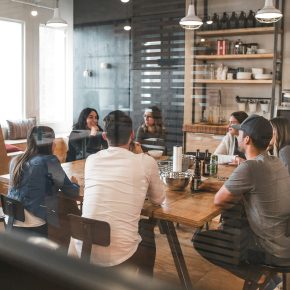
A working brand workshop is a structured session that puts the people who hold different pieces of the brand, leadership, marketing, sales, product, sometimes frontline staff, in the same room and forces the unstated assumptions onto the table where they can be reconciled, before those assumptions turn into a campaign, a product decision, or a pitch that contradicts what another team already promised a customer.
Workshop Type | Purpose | Typical Output |
Kickoff | Establish shared research and a common starting point before strategy work begins | Agreed-upon facts: competitive set, audience data, current brand perception |
Ideation | Generate and pressure-test creative or strategic territory as a group | Shortlisted directions, ranked and stress-tested together rather than by one team alone |
Alignment | Lock a decision that multiple departments have to execute against afterward | A single agreed position, statement, or platform, with visible buy-in from the room |
The value isn’t the exercises themselves. It’s the sequencing. Disagreement surfaced in a workshop, before anything gets built, costs a few hours. The same disagreement discovered after a campaign is in market costs a reshoot, a delayed launch, or a customer-facing contradiction nobody planned for. A workshop is cheap conflict, deliberately front-loaded, instead of expensive conflict discovered by accident.
A Real Example: How a Workshop Reset the Brand for Deer Creek Lodge
Deer Creek Lodge, a luxury hunting lodge in Sebree, Kentucky operating since 1978, had built a strong reputation among hunting loyalists but had never translated that reputation into a brand a broader audience would recognize. The lodge wanted to grow into new markets without alienating the guests who’d made it a destination in the first place, which meant leadership, staff, and the marketing effort all needed to agree on what the brand actually was before any campaign or website work started.
Agency Squid began the engagement with a hands-on, on-site brand workshop with the lodge’s owners and staff, paired with competitive research across the luxury lodge category and qualitative interviews with guests. The competitive review, done as part of the workshop rather than handed over afterward, surfaced a category-wide sea of sameness: most luxury lodge brands leaned on rustic tropes, outdated design, and confusing booking flows, with almost none speaking to newer outdoor enthusiasts, families, or experience-seeking travelers.
Working through audience segmentation together in the room, the group identified four distinct groups worth building the brand around: experienced hunters seeking a premium, no-compromise guided experience, curious newcomers unsure where to start with outdoor adventure, active retreaters wanting connection with nature without sacrificing comfort, and families introducing their kids to the tradition. The workshop surfaced a truth that hadn’t been articulated before: Deer Creek wasn’t just a place to hunt, it was a place to gather, reconnect, and build family memory, and that idea needed to hold across all four groups without fracturing into four different brands.
That shared understanding, reached in the room rather than assumed separately by each stakeholder, became the positioning statement “Grab a seat at the table” and carried through the identity, voice, and website work that followed. After launch, online bookings increased by nearly 50 percent and average time on site doubled, and the lodge began planning additional properties under the brand foundation the workshop had set.
What Good Brand Workshop Activities Actually Look Like
- Stakeholder perspective mapping. Before any brand language gets discussed, each function in the room states, in their own words, what they currently believe the brand stands for. The gaps between those answers are the actual agenda for the rest of the session.
- Shared competitive review. Instead of handing stakeholders a competitive audit deck to read on their own, the workshop walks through it together, so disagreement about what a competitor’s move means gets resolved live instead of surfacing later as a footnote in someone’s private notes.
- Audience definition as a group exercise. Building personas together, rather than having one team define them and present the result, gets buy-in from the people who will actually use those personas to make decisions later.
- Positioning statement drafting and stress-testing. Writing a first draft in the room, then testing it against the question “would a competitor be able to claim this exact sentence too,” forces the group to sharpen the position together instead of debating a polished version after the fact.
- Voice and tone exploration. Reading real example sentences aloud and asking whether they sound like the brand the room just agreed on catches disagreement about tone before it turns into inconsistent copy across five different channels.
Common Mistakes That Undermine a Brand Workshop
- Inviting the wrong room. A workshop without the people who will later have to execute against the decision produces agreement that only holds until those people see it for the first time.
- Trying to do a kickoff, ideation, and alignment session in one afternoon. Each type of workshop needs its own time and its own preparation. Compressing all three into one meeting usually means none of them get done properly.
- Letting the loudest voice in the room stand in for consensus. A workshop that isn’t actively facilitated to draw out quieter functions, often product, ops, or frontline staff, ends up reflecting whoever talks the most rather than what the organization actually needs to align on.
- No follow-through documentation. A workshop that ends without a written record of what was decided leaves the outcome open to being quietly reinterpreted by whoever remembers it differently a month later.
How to Know If a Brand Workshop Is Working
A workshop is working if decisions actually get made in the room instead of tabled for a follow-up meeting. A workshop that ends with “let’s take this away and think about it” usually means the disagreement never got surfaced in the first place, only postponed.
The clearer, longer-term signal shows up afterward: can someone outside the room, a new hire, a sales rep, a vendor, describe the brand’s position and hear it match how leadership describes it. When a workshop actually builds alignment, that description holds steady across the people who were in the room and starts spreading to the people who weren’t.
Watch for a subtler failure mode too: a workshop that produces enthusiastic agreement in the room but no visible change in how teams operate afterward. That gap usually means the session generated consensus on paper without actually resolving the underlying disagreement, often because a dissenting voice went along with the group rather than pushing back when it mattered. A facilitator’s job includes noticing that kind of quiet non-agreement and drawing it out before the session ends, not after the workshop has already been called a success.
Alignment Is the Product, Not a Side Effect
Treating a brand workshop as a creative exercise misses what it actually accomplishes. The ideas that come out of a good session matter, but the alignment that makes those ideas usable across an entire organization is the real deliverable. A brilliant positioning statement that only lives in the marketing team’s head is not meaningfully different from no positioning statement at all, once product, sales, and leadership go back to describing the brand three different ways.
This is also why a workshop tends to outperform a deck. A deck can be read, nodded at, and forgotten by the following Tuesday. A workshop asks people to commit to a decision out loud, in front of colleagues from other departments, which creates a form of ownership a passive presentation never generates. The people who argued their way to a position in the room are the people who defend it later, in meetings the facilitator isn’t in.
Agency Squid’s creative workshops and brand advisorship work is built around that distinction: sessions designed to produce decisions the whole organization can act on, not just a set of ideas one team walks away excited about.
Brand Workshop FAQs
Read More
1. What happens in a typical brand strategy workshop?
A typical brand strategy workshop brings key stakeholders together to align on where the brand currently stands, review competitive and audience research together, and work through positioning, messaging, or naming decisions as a group rather than in separate departmental meetings. The exact activities vary by what the brand needs to solve, but the structure always centers on surfacing disagreement early rather than after creative work has already started.
2. How long should a brand workshop take?
Most focused brand workshops run a half day to a full day for a single topic, such as positioning or messaging. Larger engagements covering a full brand platform, competitive research, audience segmentation, and positioning, often run across multiple sessions over several weeks, with research and synthesis happening between them.
3. Who should be in the room for a brand workshop?
Anyone who makes decisions that affect how the brand shows up needs to be there: marketing leadership, sales, product, and often frontline staff who interact with customers directly. Leaving out a function that will later have to execute against the brand tends to produce alignment that only holds until that function’s first meeting after the workshop ends.
4. Can a brand workshop replace formal market research?
No. A workshop organizes and reconciles what stakeholders already believe and surfaces where research is actually needed. It works best paired with real audience and competitive research, run either before the workshop to inform it or immediately after to test what the room agreed on. A workshop without any research behind it risks aligning a group around a shared assumption that turns out to be wrong once it meets an actual customer.
5. How do you measure whether a brand workshop worked?
The clearest measure is whether decisions made in the workshop actually get used afterward, in campaigns, product choices, and how different teams describe the brand, rather than quietly reverting to how things were done before the session. A longer-term signal is whether people outside the room start describing the brand consistently with the people who were in it.
6. What's the difference between a brand workshop and a brainstorm?
A brainstorm generates a wide range of ideas with few constraints, aiming for volume and novelty. A brand workshop is narrower and more structured, built to reconcile specific unstated assumptions across stakeholders and end with a decision the room has agreed on. A workshop can include a brainstorming exercise as one component, but the goal is alignment on a decision, not a long list of unranked ideas.