


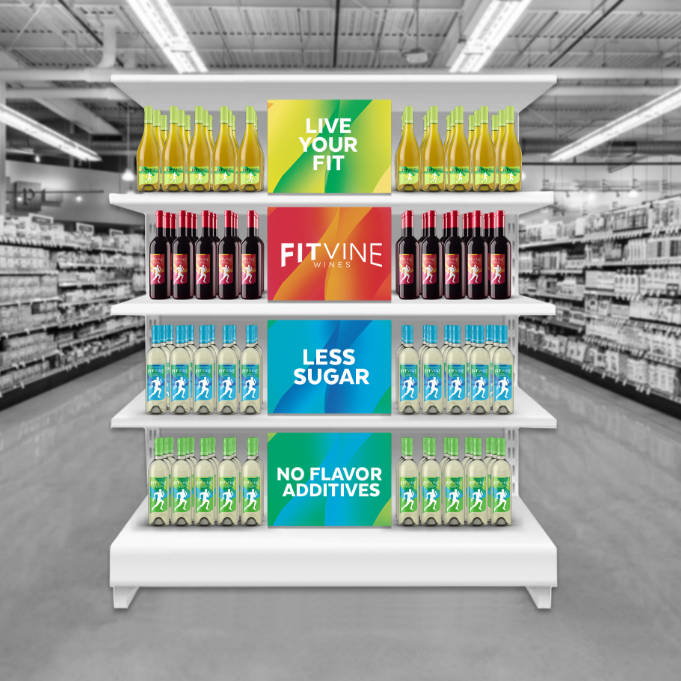

Shopper marketing is the work that influences a buyer’s choice along the path to purchase, from list-making and search to the shelf, the cart, and the checkout. Retail media is one tool inside it: paid advertising sold by retailers on their sites, apps, and stores. Retail media buys reach at the moment of purchase. Shopper marketing decides what the brand says and shows when it gets there.
The two get confused because retail media budgets now sit where shopper marketing budgets used to. Many CPG brand teams find their in-store and promotional money absorbed into sponsored product ads and retailer media packages. The ads run. The shelf still looks the same. The product still loses to the brand next to it.
This guide draws the line between the two, explains what each one does well, and gives brand managers a framework to plan, brief, and measure both.
Why the Line Matters Now
Retail media keeps taking share of marketing budgets. EMARKETER forecast that US advertisers would spend $69.33 billion on retail media in 2026, up from $58.79 billion in 2025. The same forecast found that $9.42 billion of the $10.53 billion in new 2026 spending would go to Amazon Ads and Walmart Connect. Later EMARKETER updates revised the 2026 figure upward, but the direction holds: more money, concentrated in two networks.
That concentration matters for a brand manager. Retail media at the largest retailers increasingly works like a toll. You pay to stay visible in search results and on product pages. The brands that win the click and the shelf still need a reason to be chosen over the brand in the next tile.
Retail media answers “will the shopper see us.” Shopper marketing answers “will the shopper pick us.” You need both answers, and the second one usually decides whether the first one pays off. A brand with a clear reason to buy gets more out of every retail media dollar, because more of the shoppers it reaches convert.
What Retail Media Does Well
Retail media earns its budget in four ways.
- Reach at the point of decision. Sponsored products and search ads appear when the shopper is ready to buy.
- Closed-loop data. Retailers can tie ad exposure to purchases on their platforms, which gives a clearer read on sales impact than most media.
- Defensive coverage. Bidding on your own brand terms keeps competitors from intercepting shoppers who searched for you.
- Retailer relationships. Spending with a retailer’s media network can support broader joint business planning.
These strengths are real, and most CPG brands should use them. The problem starts when a brand treats retail media as the whole plan.
What Retail Media Cannot Do
Retail media inventory runs on formats the retailer controls: product tiles, banners, sponsored listings, and in-store screens. Those formats compress the brand into a product image, a price, and a short line of copy. They reward brands that already have a clear reason to buy. They do not create that reason.
Three gaps follow.
- Brand meaning. A sponsored tile cannot explain why your product deserves a premium or how it differs from private label. If shoppers do not already know, the tile wins impressions and loses the comparison.
- Shelf presence. Most CPG volume still moves through physical stores. Packaging, displays, shelf communication, and secondary placements decide what the shopper notices in the aisle.
- Category building. Retail media optimizes for the next sale on one retailer’s platform. It rarely grows a category or builds a buyer’s understanding of a new product type.
Shopper marketing fills these gaps.
What Shopper Marketing Covers
Shopper marketing spans every point where a buyer forms or acts on a purchase decision. For a CPG brand, the core work includes:
- Packaging that communicates the brand and the benefit at a glance
- In-store communication: shelf talkers, signage, displays, and endcaps
- Retailer-specific programs built around each retailer’s shopper and calendar
- Promotions designed to build the brand, not only move volume
- Sampling and demonstrations
- Category education for retail buyers and store teams
- Digital shelf content: product titles, images, and descriptions on retailer sites
Notice the overlap with retail media on that last line. Digital shelf content is where the two disciplines meet. A sponsored listing drives the shopper to the product page. The product page content decides whether they add to cart.
A Framework: Reach, Reason, Readiness
Use three questions to split budget and brief work between retail media and shopper marketing.
Reach: will the shopper see us?
This is retail media’s job, along with in-store placement and distribution. Measure it with impressions, share of search, share of shelf, and display compliance.
Reason: will the shopper choose us?
This is the brand and shopper marketing job. It covers the benefit you lead with, the proof you show, and how the pack and the in-store communication express both. Measure it with conversion rate, trial, and price realization against competitors.
Readiness: is the retailer set up to sell us?
This covers category education, store team training, merchandising support, and joint business plans. Measure it with distribution points, display execution, and retailer feedback.
Score your current plan against all three. Most CPG plans overinvest in reach and underinvest in reason. A brand that buys more retail media without a stronger reason to buy pays more for the same loss.
What Good Shopper Marketing Looks Like in Practice
Two public examples from Agency Squid’s work show the reason and readiness layers in action.
For White Claw Hard Seltzer, the category did not exist yet when the brand launched. Retail execution included shelf talkers, category education decks, distributor support materials, and branded displays. The goal was to help retailers understand the category’s growth potential and justify shelf allocation. That is readiness work. No amount of paid reach replaces it for a new category.
For Zesty Paws, the Flipped Tails campaign carried its humor and voice into the aisle through shelf talkers and QR codes, with retail activations at PetSmart, Chewy, and Amazon and in-store sampling and pop-ups. The brand’s emotional reason to buy showed up at the point of decision, where competitors leaned on clinical claims.
Frozen and refrigerated food brands face a further constraint: the shopper sees the product through a freezer door, often for a few seconds.
The Digital Shelf Is Where Both Disciplines Meet
Every retail media dollar sends a shopper to a product page. If that page is weak, the spend leaks. Treat the digital shelf as shopper marketing territory with retail media stakes.
Check five elements on every priority retailer:
- Product title. Lead with the brand, the product, the size, and the main benefit in the order shoppers search for them.
- Main image. Show the pack clearly at thumbnail size. Many shoppers decide from a tile smaller than a postage stamp on a phone.
- Secondary images. Use them to answer the questions that stop a purchase: size in hand, ingredients, usage, and the difference from the leading competitor.
- Description and bullets. Write for the shopper, not the buyer at headquarters. Put the reason to buy in the first line.
- Ratings and reviews. Low review counts suppress conversion. Sampling and review programs build them faster than ads.
Audit these before you raise retail media spend. Fixing a product page often lifts conversion more cheaply than buying more traffic to it.
Promotions That Build the Brand
Price promotions move volume. They also teach shoppers to wait for the deal. Shopper marketing should use promotion as a tool for trial and loyalty, not as a permanent price.
Better options include:
- Bundles that introduce a new flavor or format alongside a best seller
- Value-added packs that give more product instead of a lower price
- Sampling tied to a specific occasion or meal
- Loyalty offers through retailer programs that reward repeat purchase
Each one protects the price the brand needs while still giving the shopper a reason to act now.
How to Split the Budget
No single ratio fits every brand. Use your situation to set the balance.
- New brand or new category: weight toward reason and readiness. Shoppers and retailers both need education. Retail media spend without that foundation buys clicks that do not convert.
- Established brand under private label pressure: protect the reason to buy. Invest in pack, shelf communication, and proof of difference. Our post on CPG vs private label covers this in depth.
- Established brand with strong preference: weight toward reach. Retail media protects share and captures demand you already built.
- Brand losing distribution: weight toward readiness. Retailer programs and sell-in materials come before consumer spend.
Review the split quarterly. Retail media dashboards update daily and make their value easy to see. Shopper marketing value builds more slowly and shows up in conversion and price, so it needs a defined measurement plan to hold its budget.
How to Brief Shopper Marketing Work
A shopper marketing brief differs from a campaign brief in four ways.
- Name the retailer. Each retailer has its own shopper, format, calendar, and rules. Walmart’s headquarters in Bentonville and Kroger’s in Cincinnati run different programs with different requirements. A generic brief produces generic work that fits no retailer well and gets rejected or ignored by store teams.
- Name the moment. Specify where in the path to purchase the work must act: list, search, aisle, display, or checkout.
- State the constraint. Retailers limit sizes, materials, claims, and placement. Put those limits in the brief so the creative fits on the first pass.
- Define the action. “Raise awareness” is not a shopper marketing objective. “Win trial from shoppers buying the category leader” is.
Our post on how to write a creative brief an agency can act on includes a template with CPG-specific fields for retailer calendars and claims review.
How to Measure Both
Measure retail media and shopper marketing against the same commercial outcomes, with different leading indicators.
- Retail media: return on ad spend, share of search, new-to-brand purchase rate, and incremental sales where the retailer offers lift studies
- Shopper marketing: conversion rate at the shelf or product page, display compliance, trial and repeat, price realization, and sales lift in test versus control stores
Be skeptical of any single metric. Retail media return on ad spend often credits ads for sales that loyal buyers would have made anyway. Ask retailers for incrementality data, and run holdout tests where you can. For shopper marketing, test before you scale. Testing packaging and in-store concepts with real shoppers, as Yo Mama’s Foods did with its packaging redesign, prevents expensive rollouts of work that looks good in a conference room and fails in the aisle.
Common Mistakes
- Moving the full shopper marketing budget into retail media because the dashboards look better
- Running one creative across every retailer
- Leading with promotions that train shoppers to wait for a discount
- Ignoring the digital shelf, so paid traffic lands on weak product pages
- Measuring shopper work on awareness instead of conversion
- Briefing in-store work too late for retailer deadlines, which pushes the brand into whatever display slot is left over
How Agency Squid Approaches Shopper Marketing
Agency Squid is an independent creative brand agency based in Minneapolis, working with CPG and beverage brands nationwide. Our shopper marketing work connects brand strategy to the shelf: packaging, in-store communication, retailer programs, and the digital shelf. See our integrated campaigns and creative development services and our consumer goods practice.


