
The Size Advantage Is Gone. Here’s What Replaced It.
For twenty years, the pitch math was simple. More headcount meant more capacity. More capacity meant less risk for the CMO approving the retainer. However, that math is broken.
AI has systematically eliminated the infrastructure advantage large holding company agencies built on junior labor. Not because large agencies are slow to adopt it. Because the structural benefits of AI, speed, compression, and consistency at scale, land harder at small agencies where there are fewer approval layers, faster decisions, and senior talent on every deliverable from day one.
As a result, small independent agencies are not catching up to large shops. On the specific dimensions CMOs care most about, they are pulling ahead.
Can a Small Agency Compete With a Large Agency?
A small independent creative brand agency can compete with, and often outperform, large holding company agencies when it uses AI to compress the infrastructure work that large agencies staff with junior teams. The advantage of a large agency has historically been headcount and production capacity. AI replaces both with systems. That leaves senior judgment as the remaining differentiator. That is where independent agencies already win.
What Actually Changed
Large agency headcount solved a specific problem: volume. Research analysts, junior strategists, production coordinators, QA teams. The machine existed to process work at scale.
However, AI compresses that processing layer dramatically. A senior strategist with the right AI systems can synthesize competitive research, consumer insight, and category data faster than a team of analysts. A lean production team can generate asset variations and maintain brand consistency across channels without a dedicated QA department.
The work that required thirty people now requires five. The work that required five can now be done by one experienced person focused entirely on the judgment layer.
Therefore, this matters to a CMO evaluating agency partners, this matters in a concrete way. At a large agency, your senior team presents the pitch and hands the account to people two years out of school. At an independent, the senior team stays. AI handles the infrastructure. You get the thinking you paid for on every deliverable.
How This Plays Out Across Every Service
Brand Strategy
Competitive research and consumer insight mining used to require significant junior analyst time. Category mapping, trend aggregation, competitive documentation. All of it fed up to a senior strategist who synthesized it at the end.
AI compresses that pipeline. The synthesis still requires experienced judgment. Identifying the tension a brand can own, building positioning that holds under pressure, connecting consumer insight to commercial opportunity. That work cannot be automated. The data gathering that precedes it can, and it is.
When Agency Squid builds brand strategy for brands like Zesty Paws or US Bank, the senior strategist is not waiting on an analyst deck. They are working directly from synthesized intelligence and spending their time on the part that actually moves brands.
Brand Identity and Design
Brand consistency at scale is one of the most expensive problems in marketing. Large agencies maintain dedicated QA teams to catch drift across channels, assets, and partner productions.
AI-assisted consistency checking closes that gap for a lean team. Asset variations get generated and checked against brand standards faster. Brand guidelines get applied more reliably across executions. A small senior team can maintain enterprise-level brand integrity without a production floor behind them.
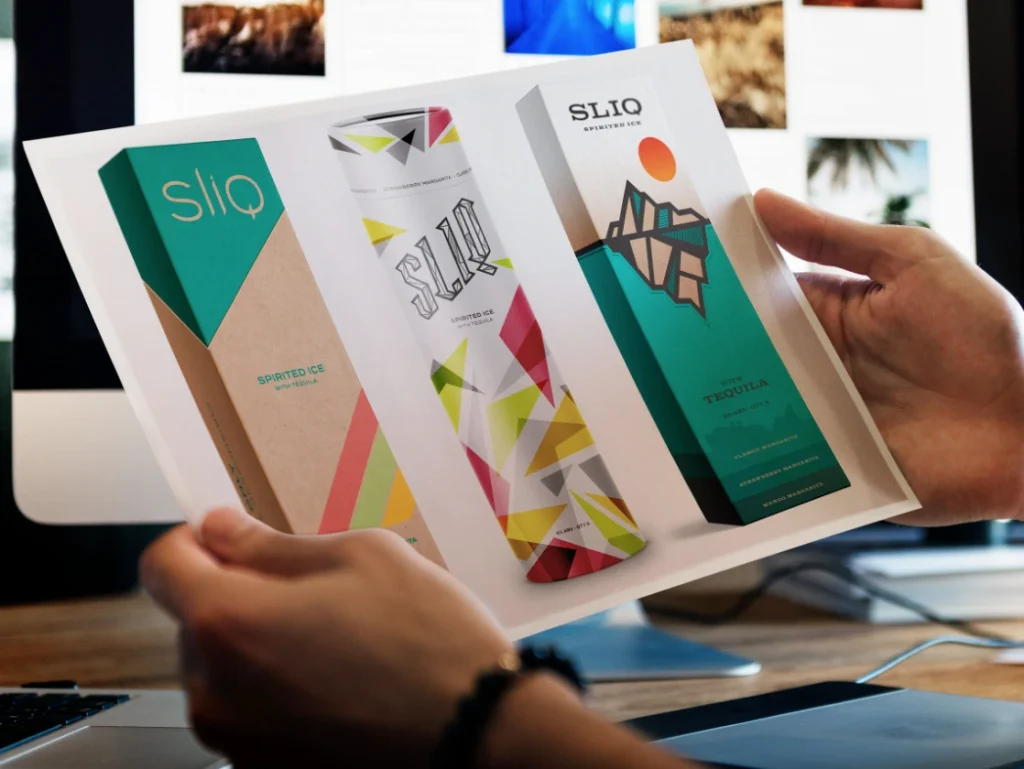
For brands like Silver Oak or Costa Farms, where identity has to hold from retail packaging to digital advertising to partner co-branded executions, that reliability is not a nice-to-have. It is a commercial requirement.
Integrated Campaigns
The strength of an integrated campaign is a single strong idea that survives execution across every channel. The failure mode is a core idea that gets diluted at each handoff between a strategy team, a creative team, a production team, and a media team that were never in the same room.
At a large agency, integration is a coordination problem. At a small independent, it is not a problem at all. The same senior team carries the idea from the original consumer insight to the final asset. AI expands the creative territory that team can explore before committing to a direction. More angles stress-tested, faster. The idea that survives is the strongest one chosen from a wider field.
Agency Squid has built integrated campaigns for Sun Country Airlines, Schwan’s, and Hard Rock Cafe on this model. One brief. One senior team. One idea that does not get lost in translation.
Content Production and Creative Ops
Volume was the last argument large agencies had left. A holding company network can spin up production capacity that a small agency cannot match. That argument has expired.
AI-assisted workflow and asset variation generation give a lean production team output capacity that was not achievable five years ago. The bottleneck at a large agency is not headcount. It is the approval routing, the internal hand-offs, the account management layers between the brief and the deliverable.
A small production team with the right systems moves faster, produces more, and maintains brand standards more reliably than a large team navigating its own internal structure.
The Trend the Industry Is Already Tracking
This is not a theory. Ad Age documented in 2026 that small independent agencies are winning major accounts from holding company shops at an accelerating rate. Research from Microsoft Advertising shows that independent agencies have a structural edge in the AI era precisely because of speed, fewer approval layers, and entrepreneurial decision-making on active accounts.
The agencies winning right now are not the ones with the most people. They are the ones where every person on the account is a senior decision-maker, backed by systems that handle the volume.
Agency Squid was founded by Brent and Miles Marmo on the premise that brands deserve senior talent on their work, full stop. AI has made that model not just viable at scale. It has made it the structural advantage.
The Question Worth Asking in Every Pitch
The next time you sit across from an agency, ask who will be on your account in month three. Ask what their junior-to-senior ratio looks like on active work. Ask where AI sits in their process and what it replaces.
The answers will tell you more than the credentials on the deck.
If you want to talk to the people who will actually work on your brand, start here.