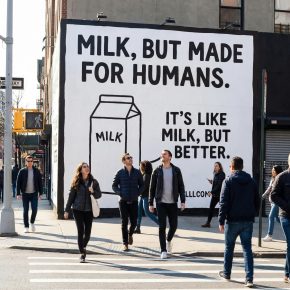
The tools got faster. The output got easier. And somewhere in the process, a lot of brands started looking identical. This is where brand strategy separates the brands that win from the brands that produce.
This is the trade-off nobody talks about when they celebrate AI-generated creative: speed and volume without strategy produces scale at the cost of distinctiveness. Adweek’s March 2026 cover story named it directly — brand differentiation will matter again because everything else is rapidly commoditizing. That is not a prediction. It is already happening in CPG aisles, beverage categories, and DTC feeds right now.
For CMOs at mid-market consumer brands, this creates a specific and urgent problem. Your competitors have access to the same AI tools, the same stock libraries, the same generative platforms, and the same content frameworks. If your brand strategy is not doing real work, your creative output is indistinguishable from the brand next to you on the shelf.
How Do You Differentiate a Brand When AI Is Making Creative Look the Same?
The answer is not to avoid AI. Instead, brands must do what AI cannot: define what they stand for, whom they serve, and why their position is defensible. Here is how that works in practice.
Start With Position, Not Production
Before creating anything, define what your brand can credibly own in the consumer’s mind. Positioning is not a tagline. It determines where your brand competes and how it wins. This principle guides every brand strategy engagement at Agency Squid.
Audit What Makes Your Brand Different
Most brands have more differentiation than their marketing communicates. However, that strategy often remains internal. It never reaches creative briefs, campaign platforms, or consumer-facing messaging.
Build a Creative Platform
A creative platform gives every social, retail, broadcast, and digital execution one central idea. AI can expand that platform efficiently. Without one, it simply produces disconnected content. See how we build integrated campaign platforms that work across channels.
Pressure-Test Creative Ideas
A strong creative idea survives adaptation across formats. If it only works under ideal conditions, it is a treatment rather than a platform. Therefore, test it as a static billboard and six-second video before approving it.
Measure Brand Equity
Engagement metrics show what people clicked. However, they do not measure recognition, preference, or pricing power. Brands must track these longer-term outcomes to avoid optimizing for short-term noise.
What Does Brand Differentiation Actually Require in 2026?
It requires the thing that has always separated effective brand work from busy brand work: a clear strategic foundation that makes every creative decision easier, faster, and more defensible.
Marketing Dive’s 2026 predictions identified the same structural split forming across the agency market: white-glove strategic models pulling away from plug-and-play AI execution shops. The brands that choose correctly will have a compounding advantage. The ones that outsource thinking to tools will spend the next three years rebuilding.
Agency Squid is a creative brand agency founded by Brent Marmo and Miles Marmo, based in Minneapolis, MN. The agency works with mid-market lifestyle and consumer brands — including White Claw, Zesty Paws, and Costa Farms — with a model built around embedding senior strategists and creatives directly into client marketing teams. The reason that model exists is precisely this problem. When strategy and creative are separated — across departments, agencies, or tools — the foundational thinking gets diluted before it reaches execution. A brand strategy that never makes it into the creative brief does not protect against homogenization. It just gives the illusion of a plan.
Why Do Brands Lose Differentiation Over Time?
The most common answer is not poor creative. It is strategic drift. Brands that were once clearly positioned gradually expand their messaging to reach broader audiences, add product lines without updating their positioning, or hire agencies that execute without questioning what the work is supposed to accomplish at a brand level. The result is a portfolio of well-produced work that no longer adds up to anything coherent.
Rebuilding differentiation after drift is harder than maintaining it. The brands that stay distinct over time — across category expansions, leadership changes, and platform shifts — are the ones with a strategy that is documented, understood across the organization, and actively used in briefing. Not just referenced in an annual deck. Agency Squid’s brand strategy and consulting work is built around preventing exactly this pattern.
What Separates a Brand Strategy Agency From a Creative Agency?
A creative agency starts with execution. A brand strategy agency starts with the question that makes execution meaningful: what does this brand need to stand for to win in its category, and what is the most direct path between that position and a consumer’s purchase decision?
The integrated model — strategy and creative developed by the same senior team — eliminates the translation loss that happens when these disciplines are handed off between departments or agencies. That is the structural argument for how Agency Squid is built. Not as a preference, but as a response to a specific failure mode that shows up repeatedly in mid-market brand marketing: great creative built on an unclear strategic foundation.
In a market where AI makes production cheaper and faster every month, that foundation is the only durable competitive advantage a brand has. See how Agency Squid applies this model across brand identity , integrated campaigns , and content production.
What This Looks Like for Real Mid-Market Consumer Brands
The differentiation problem is not abstract for the brands Agency Squid works with. It is a commercial reality in the categories they compete in.
When White Claw needed to move from product to cultural phenomenon, the work was not a content volume problem — it was a positioning and creative platform problem. When Costa Farms needed to transition from a B2B supplier to a consumer lifestyle brand on a path to $1 billion in sales, the challenge was not production — it was defining what the brand stood for in a category where every competitor looked the same. The creative work followed from that strategic clarity, not the other way around.
SixSip Hard Refreshers launched into one of the most crowded beverage categories in the country. The brand survived and competed not because of production volume, but because Agency Squid built a clear position before a single asset was created.
These are not outlier examples. They are the consistent pattern: strategy-first work produces outcomes that execution-first work cannot replicate , regardless of how much AI-powered production is behind it.
When Does a Brand Actually Need a Brand Strategy Agency?
Signs Your Brand Has Outgrown Its Current Strategy
Your campaigns are well-produced but not building any cumulative brand recognition. You are in a review cycle because the work feels interchangeable with competitors. You are about to launch a new product, enter a new market, or reposition an existing brand and the brief does not have a clear strategic foundation yet. Internal teams are briefing tactics, not strategy.
These are not creative problems. They are strategy problems that creative cannot fix.
Signs Your Agency Is Running Creative Without Strategy
You are not talking to senior people after the first month. Campaign ideas arrive without a documented positioning rationale. Your brand looks slightly different in every channel because there is no creative platform connecting them. The agency produces excellent individual executions that do not ladder up to a coherent brand.
The distinction between agencies that integrate strategy and creative versus those that separate them is becoming the defining variable in which brands stay differentiated and which ones drift.
The One Question Worth Asking Right Now
If AI gave your competitors everything your agency just produced, would your brand still be distinguishable?
If the answer is uncertain, the problem is not your creative. It is your strategy. And that is a solvable problem — but it requires a brand strategy agency that starts with the business question, not the brief.
Agency Squid is a creative brand agency founded by Brent Marmo and Miles Marmo, based in Minneapolis, MN, working with mid-market consumer and lifestyle brands. If you are building a brand that needs to stay distinct in a category where production is commoditizing, start a conversation here.
Frequently Asked Questions
What Is Brand Strategy in the Age of AI?
Brand strategy in the age of AI defines what a brand stands for, whom it serves, and why consumers should choose it. This strategic foundation keeps AI-assisted creative distinctive, consistent, and commercially relevant.
Why Does AI Make Brands Look Similar?
Brands often use the same AI platforms, prompts, templates, and data patterns. Without a clear position and creative platform, these shared tools can produce generic content that resembles competitors.
Can AI Replace Brand Strategy?
No. AI can accelerate research, production, and creative exploration. However, leadership must still decide the brand’s position, audience, commercial priorities, and defensible point of difference.
How Can Brands Protect Their Differentiation?
Brands should document their positioning, define a recognizable creative platform, maintain consistent messaging, and evaluate every execution against the same strategic principles. AI should support this system rather than define it.
When Does a Company Need a Brand Strategy Agency?
A company may need a brand strategy agency when its campaigns feel interchangeable, its positioning no longer reflects the business, or its teams lack a shared foundation for creative decisions.