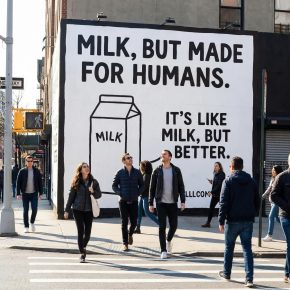
Marketing has reached a trust inflection point.
Consumers are more skeptical than ever. Categories are crowded. Claims feel interchangeable. And AI has accelerated the problem by making it easier to say more, faster, with less friction. What it has not done is make brands more believable.
Across the marketing ecosystem, from Ad Age to Fast Company, the conversation has shifted. The question is no longer whether brands should use AI. It is how they use it without eroding trust at scale.
Because trust is no longer a soft metric. It is a conversion driver. And AI, when misused, is actively working against it.
The Trust Gap AI Accidentally Created
AI excels at efficiency. The technology compresses timelines, expands output, and removes friction from production. That power, when applied indiscriminately to creative and messaging, has created a sameness problem.
Consumers feel it.
They see the recycled language. The generic tone. The brand voices that sound eerily alike. What was meant to increase relevance has instead fueled skepticism. When everything feels automated, nothing feels intentional.
This is where many brands misstep. They deploy AI directly into consumer-facing expression before establishing clear guardrails around voice, values, and truth. The result is scale without credibility.
Trust breaks when messaging feels optimized rather than earned.
Transparency Is Not a Message. It Is a System.
ServicesTransparency does not come from saying more. It comes from alignment.
Consumers are not asking brands to abandon AI. They are asking brands to be honest about what they stand for, how they operate, and whether their actions match their claims. AI becomes a liability only when it replaces judgment instead of supporting it.
Brands earning trust right now are using AI behind the scenes to improve efficiency while keeping humans firmly in control of meaning.
These brands use AI to analyze patterns rather than invent purpose. They accelerate production without allowing technology to define their voice. Ultimately, AI supports their systems instead of creating shortcuts.
This distinction matters. Because transparency is not about disclosure. It is about consistency across every touchpoint.
Where AI Belongs in a Trust-First Brand Strategy
AI is incredibly powerful when applied to the right layers of brand ecosystem.
Operational efficiency. Media optimization. Audience modeling. Performance diagnostics. Supply chain forecasting. Content versioning. Localization. These are areas where AI can dramatically improve speed and precision without touching the emotional core of brand.
Creative and messaging are different.
These are trust surfaces. They require taste. Context. Cultural fluency. Restraint. AI can assist, but it cannot lead. Not without flattening the very signals consumers use to decide what is real.
At scale, the brands winning are those that treat AI as infrastructure, not identity.
We see this play out most clearly in brand turnarounds and growth engagements where operational efficiency is scaled quietly behind the scenes, while consumer-facing expression remains human, intentional, and consistent.
Skeptical Consumers Do Not Need More Proof. They Need Fewer Contradictions.
Modern consumers are not hostile. They are discerning.
They do not need brands to convince them. They need brands to stop contradicting themselves. Trust erodes when messaging outpaces reality, when values show up in campaigns but not operations, when speed replaces substance.
AI amplifies whatever system it is plugged into. If the system is incoherent, AI makes it louder. If the system is grounded, AI makes it stronger.
This is why brands must design trust upstream through strategy, brand architecture, voice frameworks, and behavioral commitments. Only then does scale work in your favor.
What This Means for Brands Right Now
The next phase of marketing will not be defined by who uses AI the most. It will be defined by who uses it with the most discipline.
Trust and transparency are not anti-technology positions. They are leadership positions. They require brands to decide what should remain human and what can responsibly be automated.
Brands that get this right will move faster without feeling fake. Their marketing will scale without sounding hollow. Consistency, rather than persuasion, will help them convert skeptical consumers.
That is the real opportunity AI presents. Not to replace creativity, but to protect it.
Frequently Asked Questions About AI Consumer Trust
What Is AI Consumer Trust?
AI consumer trust is the confidence people maintain in a brand when it uses artificial intelligence responsibly. It depends on accurate claims, consistent behavior, transparent practices, and meaningful human oversight.
How Can Brands Use AI Without Losing Consumer Trust?
Brands should use AI to support research, optimization, localization, and production. Humans should remain responsible for brand purpose, voice, cultural judgment, factual accuracy, and final consumer-facing decisions.
Why Can AI-Generated Content Reduce Trust?
AI-generated content can reduce trust when it feels generic, repetitive, inaccurate, or disconnected from a brand’s actions. Consumers become skeptical when automated messaging replaces authentic expertise and distinctive brand expression.