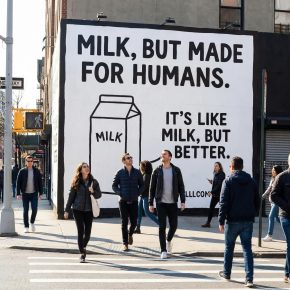
If 2023 was the year AI entered the room and 2024 was the year it refused to leave, then 2025 became the year brands finally realized they weren’t competing with AI at all—they were competing with attention, identity, and cultural fluency.
Across categories—CPG, beverage alcohol, food, wellness, pet care, travel—2025 revealed the same truth: brands win by creating meaning, not volume. Creative mattered again. Distinctiveness mattered again. And marketers who treated culture as a system, rather than a stunt, saw the strongest returns.
As we head into 2026, the stakes are even higher. Consumer expectations are evolving at the speed of platforms, and brands that aren’t building for cultural participation will feel the squeeze. The good news? The path forward is clearer than ever.
Here are the biggest lessons from 2025—and the shifts that will define the next year of marketing.
2025’s Biggest Lesson: AI Accelerated Everything Except Originality

Marketers entered 2025 armed with every AI tool imaginable—content automation, sentiment engines, creative copilots, production accelerators, and media optimizers. But that abundance created an unexpected side effect: sameness.
According to AdAge and The Drum, more than 70% of brand content that used AI to “speed up production” also saw a drop in originality scores, consumer resonance, and emotional recall. Meanwhile, brands with a strong point of view—think cultural tension, creative edge, or a differentiated aesthetic—outperformed category peers despite having less content volume.
The lesson:
AI doesn’t replace creativity. It replaces mediocrity. Creativity becomes the differentiator again.
This mirrors what we’ve seen across our own work at Agency Squid: brands that show cultural fluency, emotional clarity, and creative distinction are the ones that grow. Silver Oak, Costa Farms, Zesty Paws—very different clients, same result: relevance beats repetition.
2025 Trend: Brands That Joined Culture Won. Brands That Observed It Lost.
The highest-performing work of 2025, as highlighted by Fast Company, AdWeek, and Muse by Clio, shared one consistent trait: participation.
Not commentary.
Not mimicry.
Not trend-hopping.
But meaningful, brand-owned participation in cultural movements consumers cared about.
Examples included:
Brands creating rituals, not just ads
Food and beverage brands using micro-moments to shift perception
Retailers injecting purpose into everyday behaviors
Disruptors using humor and absurdity to cut through
Legacy brands trading nostalgia for modern emotional value
The pattern is unmistakable: consumers reward brands that behave like people, not billboards.
This mirrors the cultural work we built around Silver Oak’s “Milestone Makers,” Summit Brewing’s Minnesota-centric rituals, and the category-shifting emotional storytelling behind Zesty Paws’ “Flipped Tails.” When brands tap into real human behavior, consumers respond.
2025 Data Shift: Discovery Moved From Search Engines to Social Signals
Search behavior fractured in 2025.
Google isn’t disappearing, but it’s no longer the first stop for many consumers.
According to Forbes and Social Media Today:
Gen Z now uses TikTok as a primary search engine for lifestyle, recipes, and product categories
Creator-led content outperformed brand-led content 3:1 in recall and relatability
Voice search usage grew, especially in home categories
AI-powered discovery (AEO) became table stakes for brand visibility
Pinterest surged as a “quiet search engine” powering purchase consideration
Discovery shifted from “What’s the answer?” to “Who do I trust?”—and that is a fundamental reset for marketers.
In 2026, every brand needs:
AEO-optimized content
Creator partnerships that reflect brand identity
Modular assets designed to live natively in multiple platforms
Search strategies built around emotional queries, not transactional ones
Consumers aren’t looking for information. They’re looking for a point of view that helps them decide.
2025 Brand Lesson: Premiumization Didn’t Slow Down—It Evolved
Even during economic pressure, consumers didn’t trade down—they traded differently.
According to AdWeek’s Q3 analysis:
Consumers spent more on fewer, better things
“Small luxuries” saw disproportionate growth
Craft, care, and origin outperformed hype
Health, function, and intentionality replaced “treat yourself” culture
High-quality design became a minimum expectation
For CPG brands, this means:
Your packaging is a sales engine
Your story is part of your product
Your value proposition cannot be vague
Your emotional relevance must be immediate
As seen in Silver Oak’s turnaround and Costa Farms’ shift to expressive color systems, premiumization is less about price and more about perceived meaning.
So—What Will Shape Marketing in 2026?

Here are the signals that matter. And more importantly, what they mean for the brands planning ahead.
Humor will become the dominant attention engine.
In a year defined by heavy news cycles, consumers turned to humor as relief. Expect this to intensify.
2026 will reward brands that:
Embrace absurdism
Build characters, worlds, or moments
Lean into creator-style delivery
Don’t treat humor like a risk, but like an unlock
Gen Z wants personality—not polish.
Brands that refuse to loosen up will be ignored.
Brands will build “emotional utility.”
Consumers don’t just want to be entertained—they want help making sense of their lives.
Emotional utility looks like:
Rituals (holidays, habits, milestones)
Identity moments
Community cues
Social validation
Belonging
Brands that create frameworks—not just messaging—will see disproportionate growth.
AI will shift from creation to orchestration.
In 2026:
AI won’t just generate content
It will decide where that content should go
It will optimize message sequencing
It will customize emotional tone by user segment
It will reshape the content supply chain
This doesn’t replace marketers—it requires them to actually be strategists.
The “one big campaign” is over. Systems will win.
Trade publications unanimously pointed to the same insight: the brands creating systems of creativity, not singular hero moments, gained relevance faster and maintained it longer.
This is at the core of the Agency Squid model (and appears in our capabilities work).
Brands need:
A central idea
Modular expressions
Always-on cultural participation
Speed, not chaos
Creativity tied to commercial outcomes
Campaigns ignite attention.
Systems sustain it.
This will define the next decade.
Distinctiveness will matter more than performance metrics.
As AI homogenizes execution, distinctiveness will become the ultimate performance lever.
Your brand needs:
A recognizable voice
A visual world
Emotional clarity
A cultural point of view
A repeatable style
Your difference is your advantage.
Your sameness is your liability.
2026 Prediction: Brand Managers Will Become Culture Architects
The role is expanding.
Marketers aren’t just managing channels, budgets, or assets—they’re now:
Cultural interpreters
Creative editors
Identity architects
Platform strategists
Community builders
The brands that thrive in 2026 will be the ones guided by marketers who understand how creativity, cultural relevance, and commercial pressure intersect—and how to use that intersection as a competitive edge.
This is what we built Agency Squid around. And it’s why our model is resonating with consumer brands looking for an edge: strategy that understands culture, creativity that drives value, and execution that moves the business.